Vermont Crystal Dry Stack Wall with Plantings and Mulch
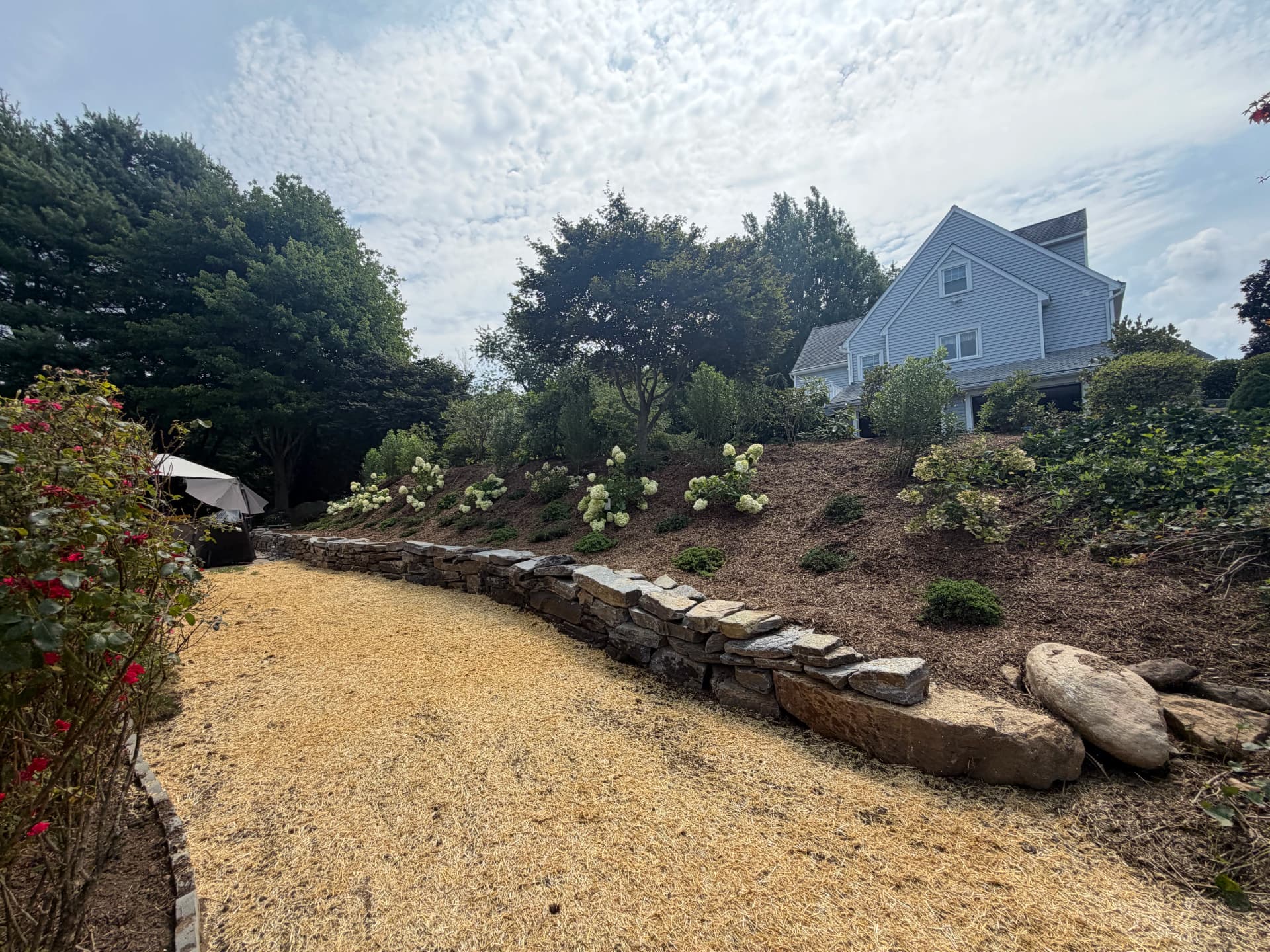
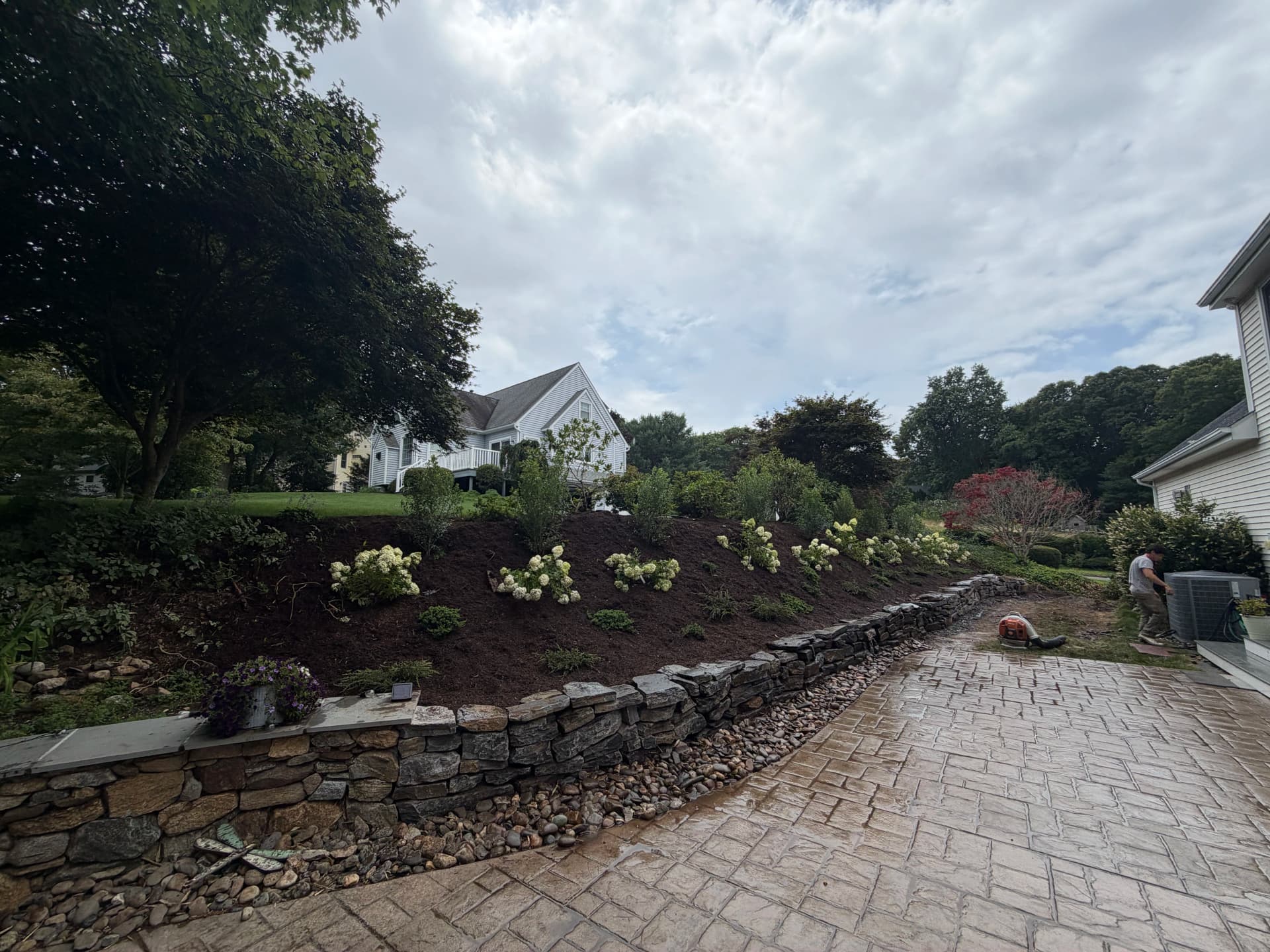
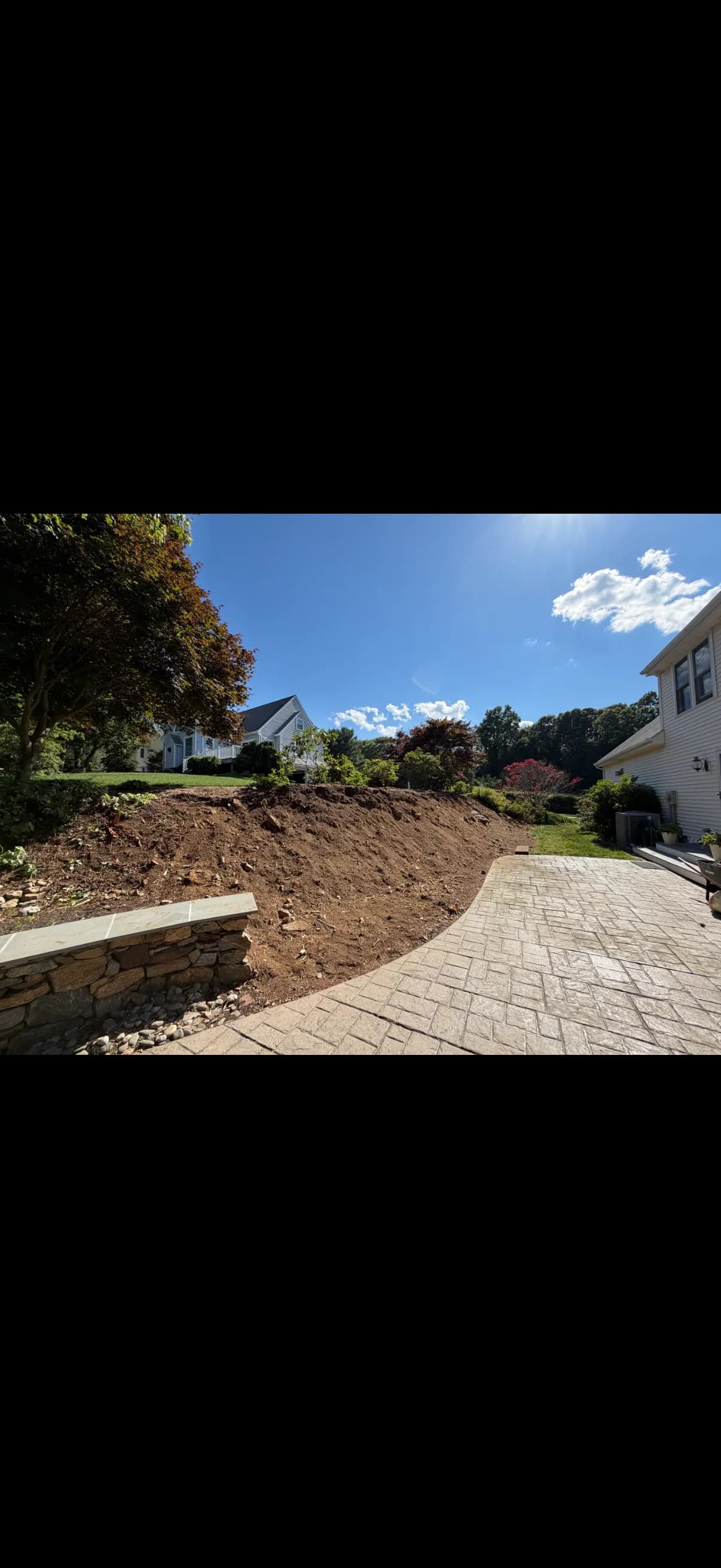
A bare, eroding slope sitting right next to a finished patio is one of those problems that's hard to ignore. It looks unfinished, it's a erosion risk, and it leaves usable space completely wasted. That's exactly what we were dealing with here - a steep grade that needed structure before anything else could happen.
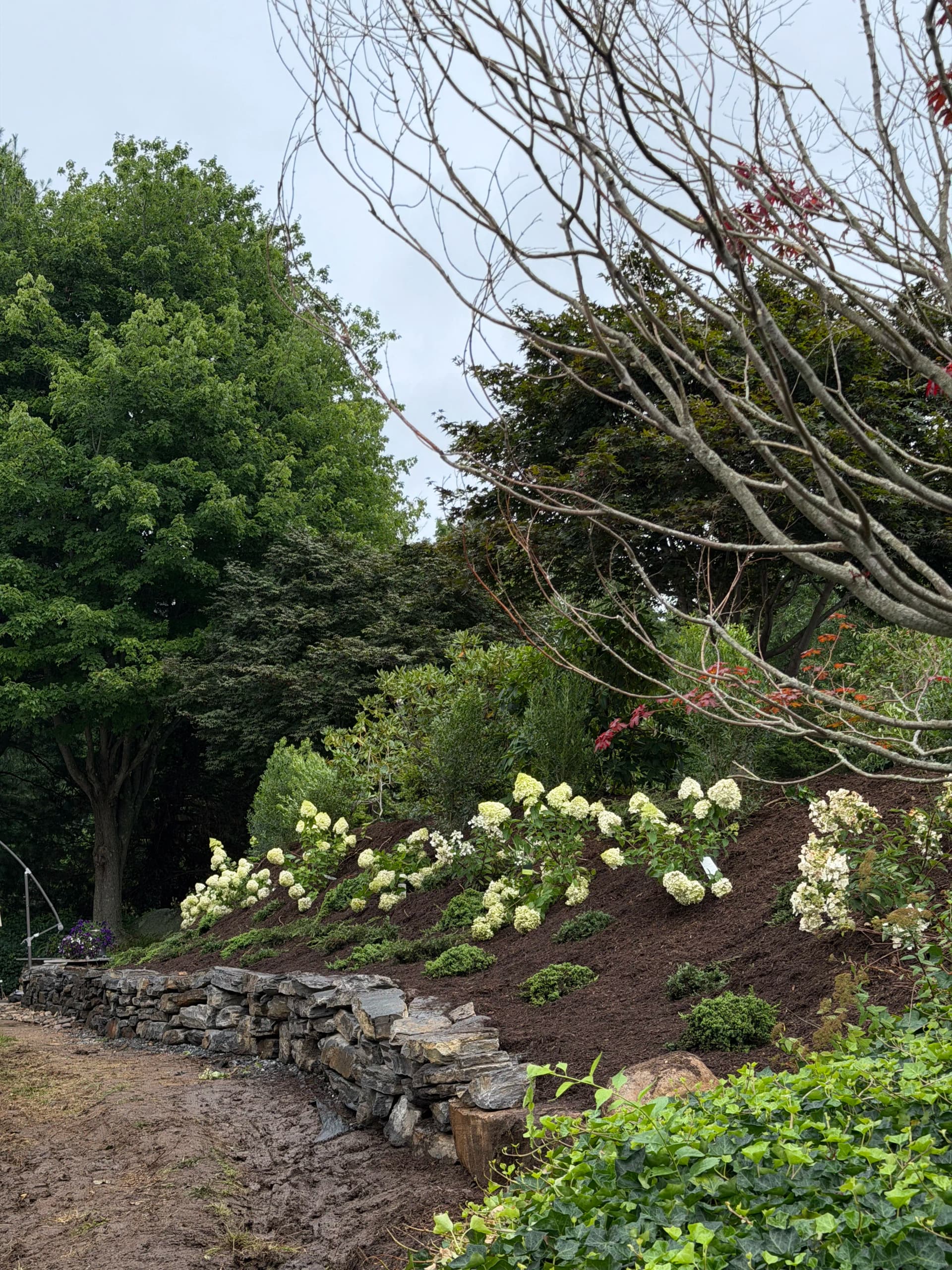
We built a Vermont Crystal dry stack retaining wall to hold the grade and create a clean, defined edge between the slope and the patio below. Vermont Crystal is a natural fieldstone with a rugged, layered look that fits right into a New England yard. Dry stack means no mortar - the stones are fitted together by hand, relying on weight and placement to stay solid. It takes more skill and patience than a standard block wall, but the result looks like it belongs there.
Once the wall was set, we moved into the landscape installation. Hydrangeas were planted across the slope in a staggered pattern, giving the whole bed a full, layered look without feeling overcrowded. Groundcover and shrubs were worked in around them to fill the space and keep things interesting at every height. Every plant was placed with the long view in mind - how it grows, how it fills in, how it holds up over time.
Fresh mulch was spread across the entire planting bed to lock in moisture, suppress weeds, and give everything a clean, finished appearance. It's one of those details that ties the whole job together. The difference between a bed with fresh mulch and one without it is immediately obvious - and it matters for plant health just as much as it does for curb appeal.
What started as a rough, unusable slope is now one of the best-looking parts of the property. The wall does the structural work, the plantings add life and character, and the mulch keeps it all low-maintenance. That's the goal on every job like this - build something that works and looks good doing it.